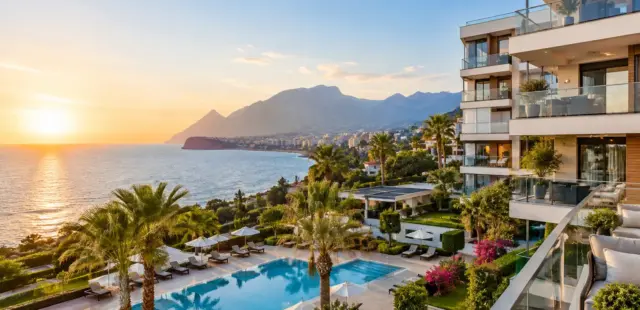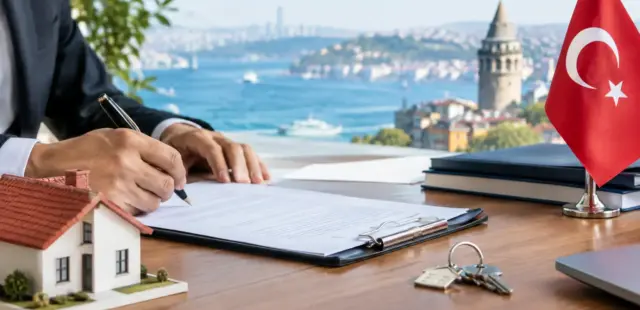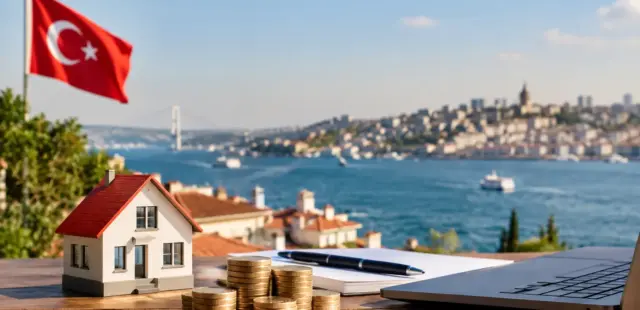


An apartment near the Mediterranean Sea can simultaneously be a place for holidays, a backup plan for the family, and an asset generating income in foreign currency. But the question of when an apartment in Turkey pays for itself has no single universal answer. For ready-to-move-in apartments in a strong resort location with the right rental model, this can take 8–12 years. For a property purchased during construction with a resale strategy, an investor may sometimes recover part of the investment much earlier — thanks to capital appreciation rather than rental payments.
The actual payback period is determined not by the advertised price per square meter, but by a combination of location, type of complex, payment currency, maintenance costs, and the owner’s strategy. An investor planning to visit for only a few weeks a year will calculate one scenario. A family buying a property for a future relocation will use another. Therefore, an apartment should be assessed as a managed international asset, rather than as an abstract “home by the sea.”
What Determines When an Apartment in Turkey Pays for Itself
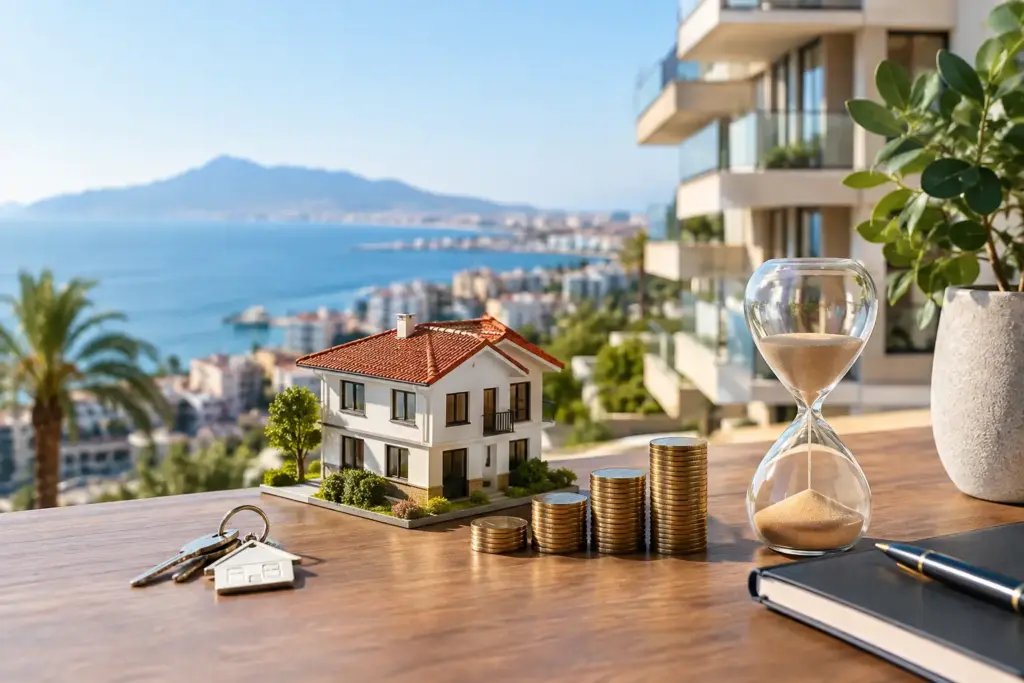
The basic formula is simple: divide the total investment amount by the net annual income. The key word here is “total.” The cost of the apartment should include taxes and registration costs, furniture and appliances if they are not included, insurance, annual complex maintenance, rental management, minor repairs, and periods without guests.
For example, an apartment costs €150,000. Taking registration, furnishing, and a reserve for initial expenses into account, the total budget is €165,000. If net income after all expenses is €13,750 per year, the simple payback period will be approximately 12 years. If the asset also appreciates each year and the owner sells it after several years, the calculation changes: capital appreciation is added to the rental income stream.
It is important not to confuse gross and net returns. Gross yield shows the ratio of total rental revenue to the property’s price. Net yield takes the owner’s actual expenses into account — and this is what allows you to plan capital recovery without inflated expectations.
Rental Income: How Much Can an Apartment Generate?
In popular areas of Alanya, Antalya, Bodrum, Fethiye, Belek, and Istanbul, demand is generated by tourists, business travelers, seasonal residents, and foreigners who spend winters in the mild climate. However, the city itself does not guarantee a result. One complex may be 300 meters from the sea, have a pool, reception, and guest infrastructure, while another may be farther from the beach or require additional investment. The rental rates and occupancy of these properties will be different.
Short-term rentals can generate higher gross income during the high season. At the same time, they require professional management: communication with guests, check-ins, cleaning, booking control, and compliance with local regulations. Legal requirements for short-term rentals in Turkey should be checked before purchasing a specific property, as certain formats may require permits and compliance with building requirements.
Long-term rentals are generally more predictable: less operational work, a more stable cash flow, and lower costs associated with frequent tenant turnover. However, their potential yield may be lower than that of a well-organized seasonal rental model. For liquid resort properties, rental yields in certain scenarios can reach up to 12% per year, but the forecast should be conservative — taking vacancy periods and all expenses into account.
Costs That Are Often Underestimated
The most common mistake is to calculate only the purchase price and monthly rental rate. In complexes with a pool, fitness center, security, sauna, or private beach, the owner pays a monthly aidat — a contribution toward maintaining the shared infrastructure. Its amount depends on the class and amenities of the project.
You should also account for utilities, insurance, taxes, management company fees, furniture depreciation, cleaning, and a reserve for unexpected work. A premium complex may cost more to maintain but at the same time be easier to rent out and sell thanks to its services, views, security, and quality of the environment. A cheaper apartment without infrastructure does not necessarily mean faster payback.
Capital Appreciation Shortens the Path to Results
Rental payback is only one part of the investment picture. The Turkish market is also valued for the opportunity to purchase a property at an early construction stage and then sell it for more after the complex is completed. In strong projects with limited supply, quality architecture, and the right location, the potential for capital appreciation can be significant. In successful cases, resale price growth can reach up to 40%, but this is not a fixed norm and does not replace analysis.
Prices are influenced by construction progress, developer reputation, sea views, distance to the beach, new urban infrastructure, exchange rates, and the overall economic situation. The properties that sell best are not simply new apartments, but assets with a clear profile of the future buyer: a family, tourist, investor, or resident looking for a comfortable life by the sea.
That is why it is important to choose a liquid format from the very beginning when planning a resale. A spacious apartment with an inconvenient layout in an area without demand may wait years for a buyer, even if its owner sees potential for appreciation. Compact, functional apartments in a serviced complex often have a broader audience and a clearer exit strategy.
Three Scenarios for Different Goals
An investor seeking regular income chooses a ready apartment in an area with established demand and immediately puts it on the rental market. Their main indicators are net annual yield and the projected payback period.
A buyer seeking capital appreciation may consider a property under construction with staged payments. Here, the entry price, payment schedule, developer reliability, and actual market price after project completion are important. Rental income appears later, but capital appreciation can shorten the overall investment horizon.
For a family planning to spend part of the year in Turkey or obtain a residence permit on an applicable basis, the apartment also has non-financial value. In this case, it would be unfair to demand maximum rental yield from the asset: the owner’s own stays reduce the number of days available to guests, but they replace hotel expenses and provide the freedom to stay in your own space.
How to Check the Calculation Before Signing the Contract
Before reserving a property, request a financial model not in one optimistic version, but in at least three: conservative, base, and strong. In the conservative scenario, use a lower rental rate, longer vacancy periods, and the full list of expenses. If the apartment remains attractive even under these conditions, the decision has a much stronger foundation.
Also check the property’s documents, land and permit status, the possibility of using the intended rental format, complex maintenance terms, and the tax treatment applicable to your status as an owner. An investor from Ukraine, Europe, or the United States should separately assess currency risk and tax residency requirements in their home country.
Turkey Property Group helps compare these parameters before purchase: from selecting an apartment among liquid properties to remote completion, arranging viewings, and providing ongoing services. This allows you to look beyond attractive visualizations and focus on the numbers, exit strategy, and real comfort of future ownership.
An apartment in Turkey pays for itself most effectively when its strategy is defined before the first payment: who will rent it, how many weeks the owner will use it, how much will be spent on maintenance, and at what price the asset could be sold. Then the sea view remains not just an emotion, but a well-planned part of your international capital.