

An apartment by the sea in Alanya, modern apartments in Antalya, or a prestigious residence in Istanbul can offer more than just a holiday home. For many families and investors, purchasing property is a way to live legally in the country, spend more time in Turkey, and hold capital in a tangible asset. However, understanding how to obtain a Turkish residence permit through real estate involves more than simply buying an apartment and submitting an application. The property’s value, its designated use, whether the neighborhood is open to foreign residents, and proper documentation are all decisive factors.
What a Residence Permit Offers Property Owners in Turkey
Owners of residential real estate may qualify for a short-term residence permit, known as an ikamet. It allows them to legally stay in Turkey beyond the visa-free or tourist period, register a residential address, access certain local services, manage everyday matters for their families, and enjoy their own property without concerns about exceeding their permitted stay.
This type of residence permit does not authorize employment. If a property owner plans to work for a Turkish company or conduct business activities, a separate permit and different legal grounds may be required. A residence permit obtained through property ownership is also not equivalent to citizenship: these are two distinct investment and immigration pathways with different financial thresholds and requirements.
The permit is generally issued to the property owner, while family members may apply as dependents under the family residence permit regulations. The validity period of the initial residence permit card depends on the circumstances of the application and the immigration authority’s decision. The permit must subsequently be renewed, with confirmation that the grounds for residence remain valid.
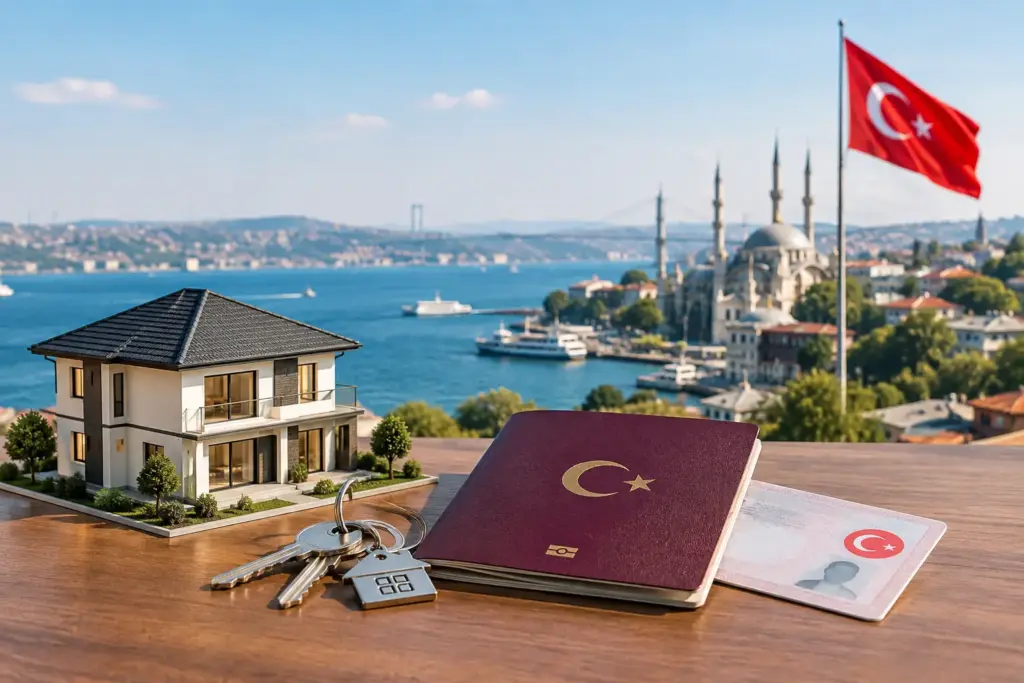
How to Obtain a Turkish Residence Permit Through Real Estate: Key Requirements
The main requirement is to own a residential property suitable for habitation. This can be a flat, an apartment, or a villa, but not a land plot, commercial premises, or a share in a property that does not provide a clearly identifiable address for registration. The buyer must be listed as the owner in the TAPU, the Turkish title deed.
In practice, applications for residence permits based on property ownership generally require a minimum property value of USD 200,000. The amount actually paid to the seller is not the only consideration: it must be supported by transaction documents and an official valuation. This is why artificially understating the purchase price in the documents to reduce taxes is dangerous. Such savings may jeopardize both the residence permit application and the subsequent resale of the property.
The second critical factor is the property’s location. Turkey periodically introduces restrictions on initial residence permit applications from foreign nationals in neighborhoods where the proportion of foreign residents is already high. A popular location is not necessarily suitable for immigration purposes. A residential complex may be attractive for rental investment, but an address in a restricted neighborhood may prevent the buyer from obtaining the expected residence permit.
Regulations and application review practices may change. Therefore, the address, cadastral information, and current requirements should be verified before paying a deposit, rather than after receiving the TAPU.
Choosing the Right Property for Living and Investment
Purchasing property for a residence permit often becomes an emotional decision: buyers want sea views, a swimming pool, nearby restaurants, and the keys as quickly as possible. However, a suitable property for a foreign owner should meet both immigration objectives and investment criteria.
For families planning to live in the property, the main considerations typically include neighborhood infrastructure, the quality of the residential complex, and proximity to the sea, hospitals, schools, and the airport. Investors must assess additional factors: rental demand, property management costs, liquidity on the secondary market, local development plans, and currency risks. Rental yields in resort regions can be attractive, but they depend on seasonality, residential complex regulations, and professional management rather than merely on an appealing developer presentation.
A newly built property may offer the potential for capital appreciation before completion. A completed property, on the other hand, allows buyers to immediately evaluate the neighborhood, neighbors, and construction quality and begin the registration process. If a residence permit is needed in the near future, completed housing with clear documentation is often a more predictable option.
Documents and Application Procedure
It is best to plan the process as a single coordinated transaction in which the purchase, address registration, and immigration application are fully aligned. Once a property has been selected, legal due diligence is conducted: the TAPU, encumbrances, developer’s legal status, compliance with the declared property category, and eligibility for residence registration at the specific address are all examined.
The buyer then obtains a Turkish tax identification number, opens a bank account if necessary, makes the payment with appropriate bank documentation, obtains a professional valuation, and registers the transfer of ownership. After that, the documents required for the ikamet application are prepared. These typically include a passport, photographs, TAPU, health insurance policy, proof of address registration, Turkish tax identification number, application form, and receipts confirming payment of government fees. Depending on the circumstances, translations and apostilled marriage certificates or children’s birth certificates may also be required.
The application is submitted through an electronic system, after which an appointment with the immigration authorities is scheduled. It is important to attend the interview with a complete and properly organized set of documents. The decision is made by a government authority, not by the agency or seller, so no one can legitimately guarantee a 100% approval rate.
Common Mistakes That Cost Time and Money
The most common mistake is purchasing an inexpensive property in a popular location, only to discover afterward that the neighborhood is closed to new applications. Purchasing commercial premises, land, or a property with questionable legal status is equally risky if the buyer assumes that any TAPU automatically establishes eligibility for a residence permit.
The second issue is confusing a residence permit with the citizenship-by-investment program. Citizenship through real estate investment has a separate minimum investment threshold of USD 400,000 and requires the property to be retained for at least three years. A USD 200,000 purchase may qualify for a residence permit but does not entitle the buyer to apply for citizenship under the investment program.
The third mistake is cutting costs on due diligence and relying on verbal promises. Buyers should verify not only the property’s size and price but also construction documentation, potential outstanding debts, the actual address, residential complex regulations, and payment procedures. This is particularly important for remote purchases: the power of attorney, transfer of funds, and documentation must be organized just as carefully as they would be for an in-person transaction.
Why Professional Assistance Makes a Difference
An international property transaction involves dozens of small decisions: which address to choose, how to arrange the valuation, what to specify in the contract, which documents require translation, and when to apply for an ikamet. A mistake at any stage can delay relocation or reduce the investment appeal of the purchase.
Turkey Property Group helps bring these stages together into a coordinated process, from investment property selection and neighborhood verification to ownership registration, document preparation, and after-sales support. For clients, this means more than simply choosing an apartment with a terrace overlooking the Mediterranean Sea. It means acquiring an asset that serves a specific purpose: residence, rental income, capital preservation, or an immigration plan.
Before reserving a property, define your primary objective for the next two to three years. If obtaining a residence permit is your main priority, the address and legal eligibility should take precedence over the emotional appeal of panoramic views. If rental income and capital appreciation are also important, choose a property that not only has the potential to become your home but also offers a clear prospect of remaining a valuable asset.