


An apartment by the sea in Alanya, a property in central Istanbul, or a new residential complex in Antalya does not necessarily require several flights and weeks of negotiations on-site. Buying an apartment in Turkey remotely makes it possible to complete a transaction from another country, provided that every step — from document verification to property ownership registration — is handled by a responsible professional and supported by clear documentation.
This option is not limited to buyers who cannot travel. For entrepreneurs, families, and international investors, it offers an opportunity to secure a liquid property when a decision needs to be made quickly. However, a remote purchase should involve more than buying an attractive image from an architectural rendering. It should be an investment in a verified asset with a transparent acquisition cost, projected expenses, and a clear strategy for future use: holidays, rental income, resale, or relocation.
How Buying an Apartment in Turkey Remotely Works
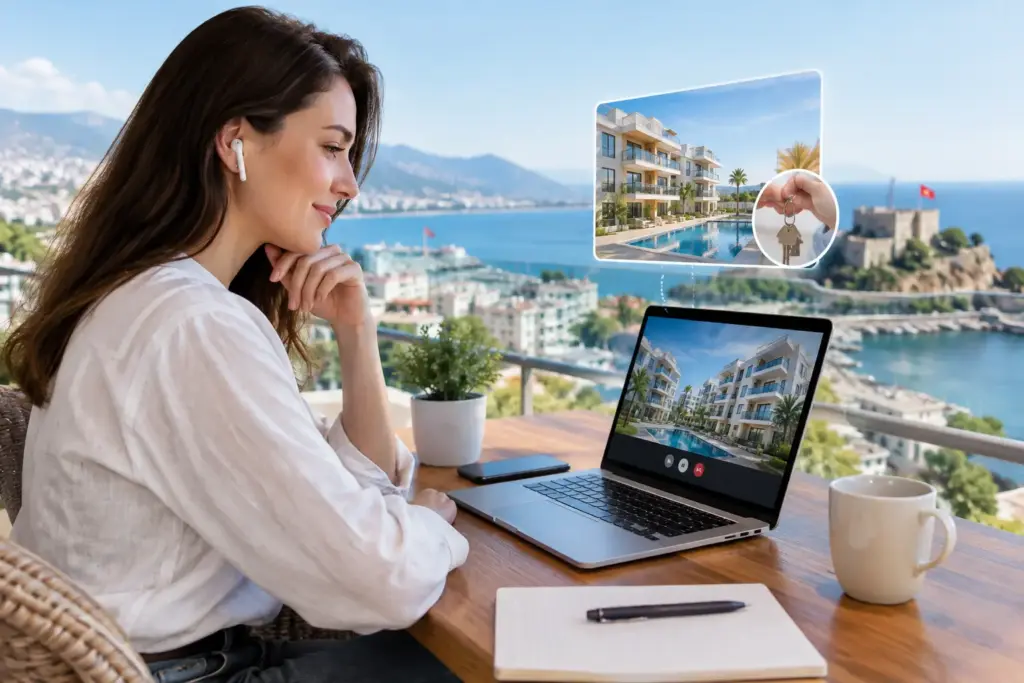
A remote transaction does not mean that buyers sign documents blindly. It means that an authorized representative in Turkey handles certain procedures on their behalf, while buyers monitor the process through video calls, documentation, bank confirmations, and regular reports. In a properly organized transaction, clients see not only the exterior of the residential complex but also the apartment’s legal status, contractual terms, and complete financial model.
The first stage is an investment brief. It is important to establish not only the budget but also the purpose of the purchase. An apartment intended for personal holidays may be located in a quieter neighborhood, while an income-generating property requires proximity to the beach, airport, infrastructure, tourist attractions, and professional rental management services. Investors should also consider the neighborhood’s liquidity, floor plan, floor level, views, developer’s reputation, and resale potential.
A shortlist of properties is then prepared. Virtual property viewings should be conducted live rather than consist exclusively of promotional videos. The representative should show the building entrance, grounds, views from the windows, apartment condition, route to the sea, neighboring developments, and local infrastructure. For new developments, it is advisable to compare the proposed project with actual construction progress, completed phases, and the developer’s previously delivered residential complexes.
Property Verification Before Reservation
This is the stage where the security of the transaction is established. Resale properties must be checked against official registry records to determine who owns them and whether there are any mortgages, seizures, outstanding debts, or other restrictions. It is also necessary to verify that the apartment matches its technical documentation, that the building has the required occupancy permits, and to review the residential complex’s regulations and monthly maintenance fees.
The priorities are different when purchasing a property under construction. Buyers need to assess the developer’s documentation, land ownership rights, construction permits, payment schedule, expected handover date, and penalties for delays. Prices at the initial sales stage may be attractive, but a lower price does not always mean a better investment. Sometimes a completed apartment in a desirable location generates rental income immediately, while a property under construction requires waiting and involves greater project-related risks.
A reservation should only be made once the buyer has received the essential documents and clearly understands what they are paying for. The agreement must specify the property, price, payment schedule, included fixtures and fittings, registration deadline, and refund conditions. Payments should follow a transparent procedure established in the contract and be supported by bank confirmations. A request to transfer money to an unfamiliar intermediary’s personal bank card is a reason to suspend the transaction and conduct additional checks.
Power of Attorney: Maintaining Oversight Without Giving Up Complete Control
To register a transaction without being physically present, the buyer issues a power of attorney to a representative. This can be arranged through a Turkish consulate or a local notary, followed by apostille certification and translation in accordance with Turkish requirements. The exact procedure depends on the country where the buyer is located, so the documentation should be agreed upon before visiting the notary.
A properly drafted power of attorney should not be overly broad. It should define specific powers: obtaining a tax identification number, signing the contract, submitting documents to the land registry office, paying the required fees, and obtaining the TAPU — the Turkish title deed. Where necessary, its validity period, the specific property, or the maximum transaction amount can be restricted.
Passport details, translations, document photographs, and banking formalities should be prepared in advance. Some procedures can be arranged remotely, but banking regulations, government requirements, and foreign currency verification procedures may change. Therefore, relying on outdated advice from online forums is not recommended. Payment procedures and documentation requirements should be verified immediately before the transaction.
TAPU Registration and Final Payment
The key stage is registering property ownership with the land registry office. The representative acts under the power of attorney, while the buyer receives confirmation of each stage, copies of submitted documents, and the final TAPU document. Before completion, it is essential to verify the spelling of the owner’s name, property specifications, address, ownership share, and absence of any terms that have not been agreed upon.
The transaction budget should also be planned separately. In addition to the apartment’s purchase price, expenses may include taxes and registration fees, notary and translation services, insurance, residential complex maintenance, utility connections, and furniture. How these expenses are divided between the parties depends on the type of property and the contractual terms. A professional financial breakdown establishes the total amount payable before the reservation is made, rather than after the deposit has already been transferred.
What Happens After Property Ownership Is Registered
For an apartment purchased as a holiday home, the next steps include furnishing the property, connecting utilities and services, and preparing it for the owners’ arrival. For an investment property, the priorities are furnishing it according to the preferences of the target audience, professional photography, check-in procedures, payment monitoring, and rental income reporting. Promised rental returns of up to 12% may be realistic for certain property types and locations, but they are not guaranteed. Actual performance depends on seasonality, property acquisition costs, management quality, competition, and occupancy rates.
The potential for capital appreciation should be assessed just as carefully. In successful developments purchased during construction, resale price growth can sometimes reach 40%. However, property markets do not perform uniformly across all cities and neighborhoods. Investors need more than an impressive advertised percentage. They need a well-supported exit strategy that explains who might purchase the property, when it could be sold, and the reasoning behind its potential resale value.
Property ownership in Turkey may provide grounds for subsequently applying for a residence permit, but it does not automatically grant residency. Immigration program requirements, investment thresholds, and citizenship eligibility conditions may change. Therefore, purchasing decisions should not be based solely on outdated figures from promotional materials. The current eligibility criteria should be verified first, followed by the selection of a suitable property and transaction structure.
When Remote Property Purchases Are Truly Beneficial
Remote purchases make sense when buyers clearly understand their objectives, have access to comprehensive information, and work with a team that takes responsibility for the outcome rather than simply sending property listings. This approach is particularly relevant for completed apartments with a transparent ownership history or developments by reputable developers with clear construction schedules and demand for future rentals.
However, a personal visit may be preferable when a family is choosing a neighborhood for permanent residence, comparing several cities, or has highly specific requirements regarding schools, healthcare facilities, terrain, or the atmosphere of a particular location. Virtual viewings help narrow down the options but cannot always replace experiencing a neighborhood in person. A practical compromise is to complete the property selection and legal checks remotely, then travel to Turkey for a short final viewing.
Turkey Property Group supports clients throughout the process, from investment property selection and virtual viewings to document preparation and after-sales services. With a portfolio of more than 1,600 properties and experience working with over 950 clients, the company can identify not just an apartment by the sea but a property that matches the buyer’s budget, lifestyle, and investment horizon. The average transaction period may be approximately 20 days, although the actual timeline depends on document readiness, payment methods, and the specific property’s characteristics.
The best time to begin is not when you discover the most eye-catching advertisement, but when you have clearly defined your objectives: how much you are prepared to invest, what level of income or comfort you expect, and who will be responsible for every document until you receive the TAPU and the keys.