

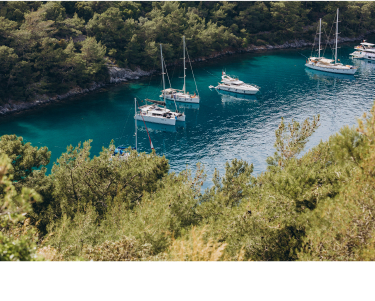
An apartment overlooking the Mediterranean, a swimming pool in a residence, and rental income can be a strong asset. However, before making a reservation, it is important to carry out a property developer check in Turkey — not based on renderings, promises from a manager, or the number of social media followers, but on documents, land, financial discipline, and the history of completed projects. This is where it is determined whether the purchase will become a manageable investment or a source of delays and unexpected costs.
The Turkish primary property market is diverse. Alongside major developers that have been building residential complexes in Antalya, Alanya, Mersin, and Istanbul for decades, there are young local companies. A new developer is not necessarily unreliable, while a well-known name does not eliminate the need to check a specific project. You need to assess both the company and the land plot, as well as your future apartment.

Why Checking a Property Developer in Turkey Affects Investment Returns
An investor is not buying square meters alone. They are buying the construction completion timeline, the ability to register ownership, resale liquidity, and the prospects of rental income. If the completion of a complex is delayed, you lose the planned rental period. If the land documents contain encumbrances or the designated use of the plot does not correspond to the project, the risk becomes much more serious than an ordinary construction delay.
Particular care is required when the property is being purchased for a residence permit, family relocation, or participation in investment immigration programs. Requirements and procedures may change, so the apartment’s status, payment method, appraised value, and document package should be checked before funds are transferred, not after the contract is signed.
The most attractive price at the foundation stage has a downside: the buyer takes on a larger share of the timeline risk. A completed apartment is usually more expensive, but it can be inspected, the Tapu — the Turkish title deed — can be processed sooner, and the property can be rented out immediately if necessary. The optimal choice depends on your goal, investment horizon, and willingness to wait.
1. Start with the Legal Entity, Not the Project Name
The first check is whether the company exists in official registers, who its founders and authorized representatives are, when it was registered, what its tax status is, and what activities it is authorized to conduct. The name of a residential complex may be a marketing name, while the contract is signed with a different legal entity. The details must correspond to the documents and payment information.
It is also worth finding out whether the developer has completed projects. Do not limit yourself to presentation photographs: visit the buildings in person, assess the condition of the facades and common areas, and talk to residents or the management company. What matters is not only a beautiful lobby on opening day, but also how the complex looks two or three years later and how effectively it is managed.
2. Check the Land and Development Rights
The land plot is the foundation of the entire transaction. You need to establish its cadastral details, owner, and the presence of mortgages, seizures, easements, court restrictions, or other encumbrances. In Turkey, such entries may be recorded in the Tapu register as ipotek, haciz, or şerh. Their meaning and consequences should be explained by an independent lawyer representing the buyer’s interests.
The zoning status of the land — imar durumu — should also be checked. It shows what can be built on the land and to what extent. Do not agree to statements such as “the permit will be issued soon” if the project is already being actively sold. What matters for an investment is a documented fact, not a forecast.
If the land does not belong to the developer, you need to understand the legal basis under which the developer is implementing the project. This may be a normal contractual arrangement, but it must be transparent, with clearly defined developer rights, deadlines, and no conflict between the parties.
3. Compare the Advertising with the Permits
A construction permit in Turkey is called yapı ruhsatı. It confirms the legality of construction according to the approved project. After the building is completed, the key document becomes the occupancy permit — yapı kullanma izin belgesi, often called iskan.
For completed property, the presence of an iskan significantly reduces risks. For a property under construction, check the valid construction permit, the declared number of floors, number of blocks, areas, and infrastructure. If the brochure promises an indoor pool, fitness center, parking, and a beach shuttle, these elements should correspond to the approved project or be explicitly stated in the contract.
The absence of some infrastructure does not always indicate a problem. Sometimes a developer deliberately offers a compact complex with lower monthly costs. The key is for the buyer to see the actual specifications rather than pay for a premium concept that will not be delivered.
4. Assess the Financial Logic of the Construction
Ask how the project is financed: through the developer’s own capital, bank financing, early-stage sales, or a combination of these sources. None of these options is inherently problematic, but an opaque financial model should raise concerns.
Pay particular attention to the payment schedule. It is safer when large installments are tied to clear construction milestones rather than abstract dates. The contract should specify the total price, payment currency, bank details, deadlines, taxes, commissions, and consequences of late payment for both parties.
Funds should be transferred through a bank using the correct payment reference, and all confirmations should be retained. Cash may seem simpler, but transparent proof of the source of funds is practically important for subsequent ownership registration, resale, or immigration procedures.
5. Read the Contract as an Investment Document
The purchase agreement should protect the buyer no less than the presentation sells the apartment. It should specify the apartment number, floor, area, layout, finishing specifications, key handover date, acceptable area deviation, and the procedure for recalculating the price. If you are purchasing a furnished apartment, it is better to attach a separate inventory of furniture and appliances.
Conditions in case of delay are critically important: is there a penalty, compensation, termination right, and refund mechanism? A “force majeure” clause should not allow the developer to postpone completion indefinitely due to any inconvenience on their side.
The contract is often prepared in Turkish, while a translation is provided to explain the terms. Do not sign a document whose content is explained to you only verbally. Independent legal review before paying a deposit costs incomparably less than correcting a mistake after the funds have been transferred.
6. Check the Status of Your Specific Apartment
Even a flawless developer does not eliminate the need to check the specific unit. For completed property, determine whether a separate Tapu has been issued, whether it has any encumbrances, who the actual owner is, and whether the registry information matches the seller.
In new developments, you may encounter kat irtifakı — a right associated with a future independent unit in a building — and kat mülkiyeti — full ownership of a completed property. Which option is acceptable depends on the project’s stage and your objective. However, the buyer must clearly understand what they receive now and which documents they should receive after construction is completed.
Also clarify the monthly aidat — the contribution for maintaining the complex. In a residence with security, a spa, several swimming pools, and a shuttle service, it can be significant. For an owner-occupier, this is a matter of comfort; for an investor, it is a direct part of the net return model.
7. Do Not Confuse a Rental Guarantee with a Forecast
A promise of income of up to 12% per year may be realistic for certain property types, locations, and periods, but it cannot be assessed without a calculation. You need to account for seasonality, service costs, cleaning, management company commissions, taxes, vacancies, and currency risk.
If the developer offers guaranteed rental income, check exactly who guarantees the payments, for how long, under what conditions, and whether that party has the financial resources to fulfill the obligation. In many cases, an honest forecast with several scenarios is more useful than an overly attractive “guarantee.”
8. Involve a Professional Team Before Making a Reservation
It is possible to collect the documents yourself, but for a buyer from abroad it can be difficult to assess their completeness, local wording, and practical risks. Professional assistance should include more than apartment selection: it should cover the developer, land documents, permits, contract, payment structure, and Tapu registration procedure.
At Turkey Property Group, the process starts with your objective: family holidays, rental income, resale, a residence permit, or relocation. After that, you can compare not only prices in different complexes, but also construction timelines, maintenance costs, location potential, and the legal readiness of the transaction. This approach turns the emotional choice of an apartment by the sea into a considered capital decision.
A reliable property will not always be the cheapest option in an advertisement. But transparent documents, a clear contract, and a real developer reputation give you what you are buying overseas property for: the peace of mind to plan your life by the sea and the future of your asset.